> The Things You Can Read: Elements of Fiction

The Things You Can Read welcomes you and thanks you for your readership. We, here at The Things You Can Read, ask your help, if you visit our site regularly, please follow us either via email or Google Friend Connect.  Launched on June 7, 2012, our site has already attracted a great deal of attention.  One of the goals of the site is to feature reviews of Children's Picture Books, Young Adult novels and Adult Literary Fiction/Nonfiction.  A second goal for the blog is to be a resource for teachers of English and writing--with examples of student created writing, writing tips, resource links, and the opportunity to pick the brain of a seasoned English teacher.  To spice things up...every now and then, we'll also include random quotes and thoughts on education and life in general, but our ultimate goal is to reach out into the blogosphere and be a "Book Whisperer" and "Writing Whisperer" to children and adults of all ages.   Thank you for your readership.  Here is to a lifetime filled with reading and writing.
Showing posts with label Elements of Fiction. Show all posts

Monday, September 19, 2016

Plot: Future of Storytelling


DO NOW

What Makes A GOOD STORY?
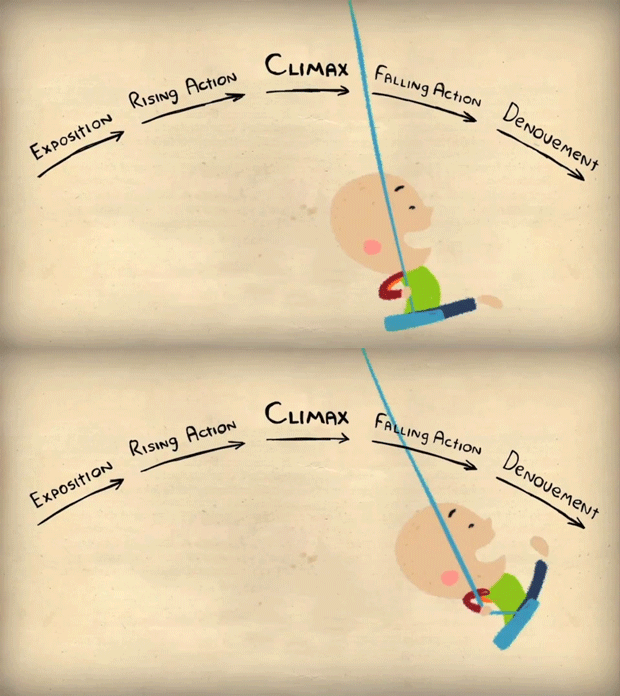

Image Credit:  The Future of Storytelling
Which of the following emotions best describes how you feel after hearing Ben's story?

A.  Distress
B.  Empathy
C.  Both Distress and Empathy

Don't know what distress means: click here
Don't know what empathy means: click here

Watch the videos before answering:


"Stories are powerful because they transport us into other people’s worlds but, in doing that, they change the way our brains work and potentially change our brain chemistry — and that’s what it means to be a social creature."
Include in your answer why?  Your answer must be written in complete sentences.  A minimum of five sentences is required.  Start Scribbling!


Story Pyramid: Analyzing Stories
Words You Need to Know

Conflict: a problem that occurs in the story
Setting: time and place where the story occurs
Tragedy: a story ending in death and sadness
Analyze: to look at something very closely.
Most stories have the following parts: exposition (inciting incident), rising action, climax (turning point), falling action, and denouement (resolution).  This pyramid is used to show how stories move; it is a graphic plot chart. Sometimes a story can be more complicated than this pyramid, but most stories fit perfectly into the pyramid.

Let’s look at each part of the pyramid…

Exposition (inciting incident): The exposition is like the set-up of the story.  The background information that is needed to understand the story is provided, such as the main character, the setting, the basic conflict, and so forth.

The exposition ends with the inciting moment, which is the one incident in the story without which there would be no story. The inciting moment sets the rest of the story in motion.
Rising Action: Rising action is a series of events and actions that move the story to a climax.  During rising action, the basic conflict is complicated by secondary conflicts (obstacles and challenges that frustrate the main character’s attempt to reach their goal).
Climax (turning point): The climax is the turning point in the story.  After the climax everything changes.  In most stories, things will have gone badly for the main character up to this point; after the climax, things will begin to go well for him or her.  However, if the story is a tragedy, the opposite will happen after the climax: things that have been going good for the main character begin to go bad.
Falling Action:  During the falling action, the conflict unravels with the main character either winning or losing. The falling action might contain a moment of final suspense, during which the final outcome of the conflict is in doubt. 

Denouement: The story ends with the denouement, also called the resolution.  In most stories, the denouement has the main character in a better position than at the beginning of the story. However, tragedies end with death and sadness, in which the main character is worse off than at the beginning of the story.

More Recent Research on the Benefits of Reading Good Literature:
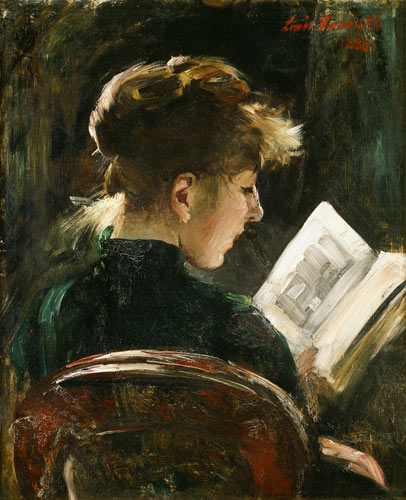


Can reading Chekhov or Alice Munro improve your social skills? According to a study published yesterday in the journal Science, researchers "found that after reading literary fiction, as opposed to popular fiction or serious nonfiction, people performed better on tests measuring empathy, social perception and emotional intelligence--skills that come in especially handy when you are trying to read someone's body language or gauge what they might be thinking," the New York Times reported. 

The researchers, social psychologists at the New School for Social Research in New York City, suggested the reason for this is that literary fiction "often leaves more to the imagination, encouraging readers to make inferences about characters and be sensitive to emotional nuance and complexity," the Times wrote.

"This is why I love science," said author Louise Erdrich, whose novel The Round House was used in one of the experiments, adding that the researchers "found a way to prove true the intangible benefits of literary fiction. Thank God the research didn't find that novels increased tooth decay or blocked up your arteries.... Writers are often lonely obsessives, especially the literary ones. It's nice to be told what we write is of social value. However, I would still write even if novels were useless.”-Shelf Awareness
The Power of Empathy:  Brene Brown


Answer the following Questions:

  1. What does Ms. Brown say is the difference between sympathy and empathy?
  2. Give an example when you showed empathy toward someone.
  3. Do you agree with Ms. Brown's conclusions about empathy?

Start Scribbling!
Believe In Truth, Beauty, Freedom, Love, and the Power of the Written Word!

Syllabus Link: HERE


Don't Forget To Be Awesome!
ABOUT THE AUTHOR:

I am an educator with over 25 years of teaching experience; I currently teach English in the public school system of Virginia. In my spare time, I am an avid reader. writer, reviewer, blogger, writing/art journaler, beekeeper, grad student, and MOTHER. - See more: Here


Thursday, November 12, 2015

How Do You Teach Point of View?


I just love this picture.  In case you can't tell that is Dorothy from the Wizard of Oz flooting up in the sky.  Dorothy's point of view of the situation and her friends, the Tin Man, Scarecrow, and the Cowardly Lion"s point of view below are very different.  As a teacher, I like to use visuals to illustrate POV.  It can be a picture or short film clips.  Both help students transfer the idea of POV to the page of a book.

The BIG push in my class for the past two weeks has surrounded the concept of Point of View.  I will say, my students act each year like it is the first time they have heard of POV, but I know that is not the case.  However, I have learned to treat POV like it was the first time they ever heard of it.  So with that said, my intro lesson introduces POV with a POW using a PREZI by Dana Linde.  Check it out an let me know what you think.


Happy Reading & Writing☮
The Things You Can Read!
Believe In Truth, Beauty, Freedom, Love, and the Power of Books & Writing!

Don't Forget To Be Awesome!
ABOUT THE AUTHOR:
I am an educator with over 25 years of teaching experience; I currently teach English in the public school system of Virginia. In my spare time I am an avid reader. writer, reviewer, blogger, writing/art journaler, beekeeper, grad student, and MOTHER. - See more: Here

Tuesday, November 10, 2015

Theme: How Do You Teach Theme?


How Do YOU Teach Theme?

There are lots of way to teach theme, but one of the ways I like to introduce theme is through film.  Not long feature films, but shorts.  Here is a short film entitled SUCCESS.  It can be used to start a conversation about theme.  After watching the film, I ask the question how would you describe the theme of the film? 
  

How do you teach theme?  Let us know here at The Things You Can Read.

Happy Reading & Writing☮
The Things You Can Read!
Believe In Truth, Beauty, Freedom, Love, and the Power of Books & Writing!

Don't Forget To Be Awesome!
ABOUT THE AUTHOR:
I am an educator with over 25 years of teaching experience; I currently teach English in the public school system of Virginia. In my spare time I am an avid reader. writer, reviewer, blogger, writing/art journaler, beekeeper, grad student, and MOTHER. - See more: Here

Friday, November 6, 2015

More on IRONY


As I have said before, IRONYis a hard concept to teach.  I have developed a series of exercises I use at the beginning of class to help make the "AHA Moment" happen. Here is another example of how I teach IRONY. 

Watch the short video.  Which of the three types of Irony is being illustrated in the video?  Defend your answer.


Young director award 'Double life' (Commercial) from Ben Brand on Vimeo.


HOW DO YOU TEACH IRONY?  Let us know here at The THings You Can Read!

Happy Reading & Writing☮
The Things You Can Read!
Believe In Truth, Beauty, Freedom, Love, and the Power of Books & Writing!

Don't Forget To Be Awesome!
ABOUT THE AUTHOR:
I am an educator with over 25 years of teaching experience; I currently teach English in the public school system of Virginia. In my spare time I am an avid reader. writer, reviewer, blogger, writing/art journaler, beekeeper, grad student, and MOTHER. - See more: Here

Thursday, November 5, 2015

How Does an Author Reveal Character?


Do you think much about how an author is building a believable character?  Well, If not, you should.  Here are some ways I help students see how character can be revealed.  What are some of the ways you like best?  Let us know here at The Things You Can Read.


What are the eight (8) ways character is revealed?


Answer:  Click HERE


More explanation: Click Here and Here


Happy Reading & Writing☮
The Things You Can Read!
Believe In Truth, Beauty, Freedom, Love, and the Power of Books & Writing!

Don't Forget To Be Awesome!
ABOUT THE AUTHOR:
I am an educator with over 25 years of teaching experience; I currently teach English in the public school system of Virginia. In my spare time I am an avid reader. writer, reviewer, blogger, writing/art journaler, beekeeper, grad student, and MOTHER. - See more: Here


Tuesday, November 3, 2015

More Research on the Benefits of Reading Good Literature

More Research on the Benefits of Reading Good Literature:


Can reading Chekhov or Alice Munro improve your social skills? According to a study published yesterday in the journal Science, researchers "found that after reading literary fiction, as opposed to popular fiction or serious nonfiction, people performed better on tests measuring empathy, social perception and emotional intelligence--skills that come in especially handy when you are trying to read someone's body language or gauge what they might be thinking," the New York Times reported. 

The researchers, social psychologists at the New School for Social Research in New York City, suggested the reason for this is that literary fiction "often leaves more to the imagination, encouraging readers to make inferences about characters and be sensitive to emotional nuance and complexity," the Times wrote.

"This is why I love science," said author Louise Erdrich, whose novel The Round House was used in one of the experiments, adding that the researchers "found a way to prove true the intangible benefits of literary fiction. Thank God the research didn't find that novels increased tooth decay or blocked up your arteries.... Writers are often lonely obsessives, especially the literary ones. It's nice to be told what we write is of social value. However, I would still write even if novels were useless.”-Shelf Awareness

The Power of Empathy:  Brene Brown


Here is how I use the video in class...I ask students to respond to the following questions on an index card:


Answer the following Questions:
  1. What does Ms. Brown say is the difference between sympathy and empathy?
  2. Give an example when you showed empathy toward someone.
  3. Do you agree with Ms. Brown's conclusions about empathy?

If you like this activity checkout our sister blog The Writing Whisperings and Start Scribbling!
Happy Writing!  from The Writing Whisperer
Believe In Truth, Beauty, Freedom, Love, and the Power of the Written Word!


Happy Reading & Writing☮
The Things You Can Read!
Believe In Truth, Beauty, Freedom, Love, and the Power of Books & Writing!

Don't Forget To Be Awesome!

ABOUT THE AUTHOR:
I am an educator with over 25 years of teaching experience; I currently teach English in the public school system of Virginia. In my spare time I am an avid reader. writer, reviewer, blogger, writing/art journaler, beekeeper, grad student, and MOTHER. - See more: Here


Wednesday, October 28, 2015

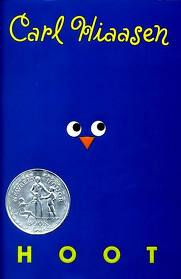
Teaching Hoot By Carl Hiaasen: Setting and Humans & Environment


Teaching Hoot By Carl Carl Hiaasen:  
Setting and Humans & Environment

My students live in the great state of Virginia.  Like Roy, in the novel Hoot, we too live in a watershed district, but our watershed district could not be more different than the one in HOOT.  So to help students "GET IT" is use this fabulous TED TALK VIDEO.  The video really helps them see Florida and what the Everglades has to offer.


How do you make a novel you are teaching come alive?  Let us know here at The Things You Can Read.

Happy Reading & Writing☮
The Things You Can Read!
Believe In Truth, Beauty, Freedom, Love, and the Power of Books & Writing!

Don't Forget To Be Awesome!
ABOUT THE AUTHOR:
I am an educator with over 25 years of teaching experience; I currently teach English in the public school system of Virginia. In my spare time I am an avid reader. writer, reviewer, blogger, writing/art journaler, beekeeper, grad student, and MOTHER. - See more: Here

Tuesday, October 27, 2015

How Do You Teach IRONY?


IRONYis a hard concept to teach.  I have developed a series of exercises I use at the beginning of class to help make the "AHA Moment" happen.  Here is an example of how I teach IRONY.  This  activity comes from my sister site  


Activity

Watch the following video carefully. Write your answer on your index card.  Find at LEAST 2 (TWO) examples of IRONY in the short film.  Your answer needs to be in complete sentences.  Complete sentences, i.e. written with proper grammar, capitalization, punctuation, and with a subject and verb. Again, give 2 (TWO) examples of irony in the video and EXPLAIN why that event was IRONIC.


Happy Writing!
Believe In Truth, Beauty, Freedom, Love, and the Power of the Written Word!


Happy Reading & Writing☮
The Things You Can Read!
Believe In Truth, Beauty, Freedom, Love, and the Power of Books & Writing!

Don't Forget To Be Awesome!
ABOUT THE AUTHOR:
I am an educator with over 25 years of teaching experience; I currently teach English in the public school system of Virginia. In my spare time I am an avid reader. writer, reviewer, blogger, writing/art journaler, beekeeper, grad student, and MOTHER. - See more: Here

Related Posts Plugin for WordPress, Blogger...