> The Things You Can Read: TED Talks

The Things You Can Read welcomes you and thanks you for your readership. We, here at The Things You Can Read, ask your help, if you visit our site regularly, please follow us either via email or Google Friend Connect.  Launched on June 7, 2012, our site has already attracted a great deal of attention.  One of the goals of the site is to feature reviews of Children's Picture Books, Young Adult novels and Adult Literary Fiction/Nonfiction.  A second goal for the blog is to be a resource for teachers of English and writing--with examples of student created writing, writing tips, resource links, and the opportunity to pick the brain of a seasoned English teacher.  To spice things up...every now and then, we'll also include random quotes and thoughts on education and life in general, but our ultimate goal is to reach out into the blogosphere and be a "Book Whisperer" and "Writing Whisperer" to children and adults of all ages.   Thank you for your readership.  Here is to a lifetime filled with reading and writing.
Showing posts with label TED Talks. Show all posts

Friday, December 4, 2015

Teaching Drama: Life on the Creative Edge


Great way to introduce your class to the trials and tribulations of the DIRECTORS life! The "Creative Process" often comes at a price.  This opens doors to some great conversation.  NOTE: Preview the beginning not all movie, opera, and stage clips are appropriate.  I start the video with Julie Taymor's talk.


How do you discuss the creative process with your students?  Leave us a comment and let us know here at The Things You Can Read!

Happy Reading & Writing
The Things You Can Read!
Believe In Truth, Beauty, Freedom, Love, and the Power of Books & Writing!

Don't Forget To Be Awesome!
ABOUT THE AUTHOR:
I am an educator with over 25 years of teaching experience; I currently teach English in the public school system of Virginia. In my spare time I am an avid reader. writer, reviewer, blogger, writing/art journaler, beekeeper, grad student, and MOTHER. - See more: Here

Wednesday, October 28, 2015

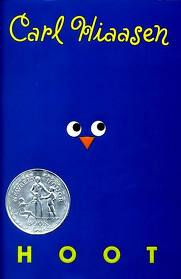
Teaching Hoot By Carl Hiaasen: Setting and Humans & Environment


Teaching Hoot By Carl Carl Hiaasen:  
Setting and Humans & Environment

My students live in the great state of Virginia.  Like Roy, in the novel Hoot, we too live in a watershed district, but our watershed district could not be more different than the one in HOOT.  So to help students "GET IT" is use this fabulous TED TALK VIDEO The video really helps them see Florida and what the Everglades has to offer.


How do you make a novel you are teaching come alive?  Let us know here at The Things You Can Read.

Happy Reading & Writing
The Things You Can Read!
Believe In Truth, Beauty, Freedom, Love, and the Power of Books & Writing!

Don't Forget To Be Awesome!
ABOUT THE AUTHOR:
I am an educator with over 25 years of teaching experience; I currently teach English in the public school system of Virginia. In my spare time I am an avid reader. writer, reviewer, blogger, writing/art journaler, beekeeper, grad student, and MOTHER. - See more: Here

Thursday, January 16, 2014

How Children Succeed: Grit, Curiosity, and the Hidden Power of Character by Paul Tough: Review Part 2


"This provocative and profoundly hopeful book will not only inspire and engage readers; it will also change our understanding of childhood itself." -Goodreads
PART 2:  Grit
“The idea of building grit and building self-control is that you get that through failure,” Randolph told me. “And in most highly academic environments in the United States, no one fails anything.” ― Paul Tough, How Children Succeed: Grit, Curiosity, and the Hidden Power of Character


What is grit?  Webster's Dictionary defines grit as showing courage and resolve- Example:  "a gritty pioneer woman".  A few synonyms offered up for Grit include: courageous, brave, plucky, mettlesome, stouthearted, valiant, bold,spirited, intrepid, tough, determined, resolute, purposeful, dogged, and tenacious.  These are great options, but I am more interested in how Angela Duckworth, an assistant professor in the psychology department at University of Pennsylvania defines it.  She defined Grit with the following analogy:  


Grit is living life like it's a marathon, not a sprint.- Angela Duckworth
Duckworth should know, her research subjects include students, West Point cadets and corporate salespeople, all of whom she continues to study to determine how "grit" is a better indicator of success than factors such as IQ or family income.  How did she become focoused on this type of research?  Well, she left her consulting job and decided to take a job teaching math to seventh-graders in a New York public school. Over the next few years she quickly realized that IQ wasn't the only thing separating the successful students from those who struggled.  This led her into the world of academia, where she continues to study this topic, as she searches for methods that can be used to teach children to be GRITTIER.

If you are interested in the survey Duckworth developed click on over to the survey and find out your grit factor:  Click Here

SIDE NOTE

How Children Succeed: Grit, Curiosity, and the Hidden Power of Character also led me to seek out other books which were mentioned in the text.  I have, of course, added several of them to my list of To Be Read books on Goodreads for further reading during my year of BECOMING.  An example of the books mentioned include Learned Optimism by Martin Seligman, a leading scholar on the subject of positive psychology.  Check it out if my comments have sparked an interest in this topic.

Click Here to get a feel for what Grit is all about.  Also check out my post of Angela's TED talk on GRIT at my sister site The Writing Whisperings:  Click Here.

This only an example the type of gems that can be found inside the covers of this book.  As I said there is so much information to be discussed and shared I have broken it down into smaller chucks in the hopes that folks will actually read and digest some of these findings.  Check back as I continue to update you on my reflections with regard to this amazing book. 
How Children Succeed: Grit, Curiosity, and the Hidden Power of Character was featured in an article entitled "The 13 Best Psychology and Philosophy Books of 2013" on Brain Pickings.  How Children Succeed: Grit, Curiosity, and the Hidden Power of Character is helping me to demystify what makes one child successful and another not. It has certainly given me clarity on the issue of how or why certain children succeed.  I have included an excerpt from the article from Brain Pickings. Read on...and if this is something that makes you go Humm...then click on over to read Brain Pickings full article or better yet pick up the book from your local bookstore or library.

"In How Children Succeed: Grit, Curiosity, and the Hidden Power of Character(public library) – a necessary addition to these fantastic reads on education – Paul Tough, whose writing has appeared in The New Yorker, Slate, Esquire, The New York Times, sets out to investigate the essential building blocks of character through the findings and practical insight of exceptional educators and bleeding-edge researchers. One of his core arguments is based on the work of pioneering psychologist and 2013 MacArthur "genius" grantee Angela Duckworth, who studied under positive psychology godfather Martin Seligman at my alma mater, the University of Pennsylvania, and has done more than anyone for advancing our understanding of how self-control and grit – the relentless work ethic of sustaining your commitments toward a long-term goal – impact success."-BRAIN PICKINGS

Summary:
How Children Succeed: Grit, Curiosity, and the Hidden Power of CharacterWhy do some children succeed while others fail?

The story we usually tell about childhood and success is the one about intelligence: Success comes to those who score highest on tests, from preschool admissions to SATs.

But in "How Children Succeed," Paul Tough argues for a very different understanding of what makes a successful child. Drawing on groundbreaking research in neuroscience, economics, and psychology, Tough shows that the qualities that matter most have less to do with IQ and more to do with character: skills like grit, curiosity, conscientiousness, and optimism.

"How Children Succeed" introduces us to a new generation of scientists and educators who are radically changing our understanding of how children develop character, how they learn to think, and how they overcome adversity. It tells the personal stories of young people struggling to say on the right side of the line between success and failure. And it argues for a new way of thinking about how best to steer an individual child – or a whole generation of children – toward a successful future.

This provocative and profoundly hopeful book will not only inspire and engage readers; it will also change our understanding of childhood itself. -Goodreads
Food for thought:
“The part of the brain most affected by early stress is the prefrontal cortex, which is critical in self-regulatory activities of all kinds, both emotional and cognitive. As a result, children who grow up in stressful environments generally find it harder to concentrate, harder to sit still, harder to rebound from disappointments, and harder to follow directions. And that has a direct effect on their performance in school.” ― Paul Tough, How Children Succeed: Grit, Curiosity, and the Hidden Power of Character

Resources:


Six Must See TED Talks from 2013:  Click Here

Six Must See TED Talks from 2013:  Click Here

How to Foster Grit in the Classroom:  Click Here

True Grit: The Best Measure of Success and How to Teach It:  Click Here

‘How Children Succeed’ — Q&A with Paul Tough:  Click Here

One Little Word℠ Introductory Video:  Click Here

NPR: MacArthur 'Genius' On Grit, Self Control And Success: Click Here

NPR: Is Having Grit The Key To Success?  Click Here

Grit Angela Duckworth's TED Talk:  Click Here

Happy Reading 
The Things You Can Read!
Believe In Truth, Beauty, Freedom, Love, and the Power of Books!

Sunday, January 12, 2014

How Children Succeed: Grit, Curiosity, and the Hidden Power of Character by Paul Tough: Review Part 1


How Children Succeed: Grit, Curiosity, and the Hidden Power of Character by Paul Tough

“What matters most in a child's development, they say, is not how much information we can stuff into her brain in the first few years. What matters, instead, is whether we are able to help her develop a very different set of qualities, a list that includes persistence, self-control, curiosity, conscientiousness, grit and self-confidence.” Paul Tough, How Children Succeed: Grit, Curiosity, and the Hidden Power of Character

As I posted earlier, I chose to read How Children Succeed: Grit, Curiosity, and the Hidden Power of Character as one of my first two reads of 2014.  Why?  Because this book fits into my quest to not only be a better parent, but to also be a better teacher, which is a direct result of  having joined a growing movement called One Little Word℠.  This movement has its participants choose a word that will guide them as they journey throughout the year.  My word is BECOMING and in my year of focus on BECOMING this nonfiction book is a  perfect fit (Click Here for more information).  As I stated earlier this particular book has been on my radar for awhile, but when one of my favorite sites to visit out there on the Internet, Brain Pickings, had it listed on their best of list for 2013, it moved up to the top of the pile.  I am now about 40 percent done, however I realized I was highlighting so much information that I needed to break up my review into parts, so here is part one. 

PART ONE:

Let me setup my remarks with a personal anecdote, when my twins were born back in  2010, one of our nurses noticed how much my husband was holding our son.  Each and every time our new baby cried his father picked him up, and this medical professional sternly reprimanded us saying that our son would be "spoiled rotten" if we continued to respond to his every cry.  Well, we both totally disagreed with what she said, but we had nothing to base our intuitive feelings with regard to her advice, and her comment always stuck with us.  My husband and I, on occasion, remember that moment when we reminisce about the twins birth  This shared parenting moment came flooding back, in what some might call an "aha moment", while reading this book.  Specific research performed by Ainsworth and Bowlby was sited that proved what my husband and I had known instinctually:

Babies whose parents responded readily and fully to their cries in the first month of life were at one year, more independent and intrepid than babies whose parents had ignored their cries. In preschool, the pattern continued-the children whose parents had responded most sensitively to their emotional needs as infants were the most self-reliant. Warm, sensitive parental care, Ainsworth and Bowlby contended, created a 'secure base' from which a child could explore the word."-How Children Succeed: Grit, Curiosity, and the Hidden Power of Character by Paul Tough
 After reading this I felt vindicated as a parent for not letting someone disrupt the positive bond my husband and I were establishing with our son during his first days of life, and the best part was that we had research on our side, and didn't even know it.  This is only one such gem that can be found inside the covers of this book.  As I said there is so much information to be discussed and shared I have broken it down into smaller chucks in the hopes that folks will actually read and digest some of these findings.  Check back as I continue to update you on my reflections with regard to this amazing book. 

SIDE NOTE

How Children Succeed: Grit, Curiosity, and the Hidden Power of Character also led me to seek out other books which were mentioned in the text.  I have, of course, added several of them to my list of To Be Read boks on Goodreads for further reading during my year of BECOMING.  An example of the books mentioned include Learned Optimism by Martin Seligman, a leading scholar on the subject of positive psychology.  Check it out if my comments have sparked an interest in this topic.


Part Two of my review/reflection will cover the idea of Grit and its importance to a child's success.  If you are interested in testing your own Grit Level take Angela Duckworth's GRIT Survey:  Click Here to get a feel for what Grit is all about.  Also check out my post of Angela's TED talk on GRIT at my sister site The Writing WhisperingsClick Here.


As I said, How Children Succeed: Grit, Curiosity, and the Hidden Power of Character was featured in an article entitled "The 13 Best Psychology and Philosophy Books of 2013" on Brain Pickings.  How Children Succeed: Grit, Curiosity, and the Hidden Power of Character is helping me to demystify what makes one child successful and another not. It has certainly given me clarity on the issue of how or why certain children succeed.  I have included an excerpt from the article from Brain Pickings. Read on...and if this is something that makes you go Humm...then click on over to read Brain Pickings full article or better yet pick up the book from your local bookstore or library.

"In How Children Succeed: Grit, Curiosity, and the Hidden Power of Character (public library) – a necessary addition to these fantastic reads on education – Paul Tough, whose writing has appeared in The New Yorker, Slate, Esquire, The New York Times, sets out to investigate the essential building blocks of character through the findings and practical insight of exceptional educators and bleeding-edge researchers. One of his core arguments is based on the work of pioneering psychologist and 2013 MacArthur "genius" grantee Angela Duckworth, who studied under positive psychology godfather Martin Seligman at my alma mater, the University of Pennsylvania, and has done more than anyone for advancing our understanding of how self-control and grit – the relentless work ethic of sustaining your commitments toward a long-term goal – impact success."-BRAIN PICKINGS

Summary:
How Children Succeed: Grit, Curiosity, and the Hidden Power of CharacterWhy do some children succeed while others fail?

The story we usually tell about childhood and success is the one about intelligence: Success comes to those who score highest on tests, from preschool admissions to SATs.

But in "How Children Succeed," Paul Tough argues for a very different understanding of what makes a successful child. Drawing on groundbreaking research in neuroscience, economics, and psychology, Tough shows that the qualities that matter most have less to do with IQ and more to do with character: skills like grit, curiosity, conscientiousness, and optimism.

"How Children Succeed" introduces us to a new generation of scientists and educators who are radically changing our understanding of how children develop character, how they learn to think, and how they overcome adversity. It tells the personal stories of young people struggling to say on the right side of the line between success and failure. And it argues for a new way of thinking about how best to steer an individual child – or a whole generation of children – toward a successful future.

This provocative and profoundly hopeful book will not only inspire and engage readers; it will also change our understanding of childhood itself. -Goodreads


Six Must See TED Talks from 2013:  Click Here

How to Foster Grit in the Classroom:  Click Here

‘How Children Succeed’ — Q&A with Paul Tough:  Click Here

True Grit: The Best Measure of Success and How to Teach It:  Click Here

One Little Word℠ Introductory Video:  Click Here

One Little Word℠ Word List: Click Here 

Grit Angela Duckworth's TED Talk:  Click Here

Happy Reading 
The Things You Can Read!
Believe In Truth, Beauty, Freedom, Love, and the Power of Books!

Saturday, January 4, 2014

How to Escape Education's Death Valley: Ken Robinson


If you have not heard of Sir Ken Robinson, you are really missing out, he is the author of The Element: How Finding Your Passion Changes Everything and Finding Your Element: How to Discover Your Talents and Passions and Transform Your Life.  I highly recommend both books, and if you have never heard him speak, what he has to say is truly worth listening to, and here is his latest TED Talk.
      
SUMMARY:

Sir Ken Robinson outlines 3 principles crucial for the human mind to flourish -- and how current education culture works against them. In a funny, stirring talk he tells us how to get out of the educational "death valley" we now face, and how to nurture our youngest generations with a climate of possibility.

Creativity expert Sir Ken Robinson challenges the way we're educating our children. He champions a radical rethink of our school systems, to cultivate creativity and acknowledge multiple types of intelligence-TED Talks
 
 
“ The dropout crisis is just the tip of an iceberg. What it doesn't count are all the kids who are in school but being disengaged from it, who don't enjoy it, who don't get any real benefit from it."-Ken Robinson
 
Ken Robinson

Ken Robinson

Ken Robinson: How to escape education's death valley
 
Have you heard of Ken Robinson?  What do you think of his ideas?  I'm a firm believer in his work/message and I'm trying to make a difference in my classroom and in the lives of my own children keeping his teachings in mind.  Let us know what you think here at The Things You Can Read.
 
Happy Reading
The Things You Can Read!
Believe In Truth, Beauty, Freedom, Love, and the Power of Books!
 
Related Posts Plugin for WordPress, Blogger...