> The Things You Can Read: Classics Club

The Things You Can Read welcomes you and thanks you for your readership. We, here at The Things You Can Read, ask your help, if you visit our site regularly, please follow us either via email or Google Friend Connect.  Launched on June 7, 2012, our site has already attracted a great deal of attention.  One of the goals of the site is to feature reviews of Children's Picture Books, Young Adult novels and Adult Literary Fiction/Nonfiction.  A second goal for the blog is to be a resource for teachers of English and writing--with examples of student created writing, writing tips, resource links, and the opportunity to pick the brain of a seasoned English teacher.  To spice things up...every now and then, we'll also include random quotes and thoughts on education and life in general, but our ultimate goal is to reach out into the blogosphere and be a "Book Whisperer" and "Writing Whisperer" to children and adults of all ages.   Thank you for your readership.  Here is to a lifetime filled with reading and writing.
Showing posts with label Classics Club. Show all posts

Monday, September 2, 2013

Classic Club Question for September 2013

Scout, Jem, and Atticus Finch
The Classics Club
:  Question of the Month

The Classics Club:  Question of the Month

Rereading a favorite classic at different stages of your life gives you different insights with each reading. Is there one classic you’ve read several times that also tells a story about you?


In my classics reading journey the classic I have reread at different stages of my life is To Kill a Mockingbird by Harper Lee.  It is both my favorite book and my favorite movie.  It has affected me differently each time I've read it. When I was a teenager, I identified with Scout, and focused on her development in the novel, but when I reread it as an adult my focus was on Atticus, and his role as an older single parent.  I know we see the story through Scout's eyes, but I feel that Atticus has so much to teach parents.  His commitment to his beliefs even when they go against the majority, and his quiet, yet direct approach to teaching his children hard life lessons are some of the reasons he is such a beloved character.  I think about Atticus often as an older parent.  I often stop and ask myself, what would Atticus do in this situation?  It often has led me to make better decisions as a parent.  Even though my twins are only three and my singleton is two, I talk to to them as I would a much older child, and try to explain the WHY behind things they might not like.  It doesn't always work that instant, but I believe over time, I have seen a difference.  Stop next time you are faced with a hard parenting decision and ask yourself WWAD-What Would Atticus Do?  See if it makes a difference.


“You never really understand a person until you consider things from his point of view... Until you climb inside of his skin and walk around in it.” ― Harper Lee, To Kill a Mockingbird

“I wanted you to see what real courage is, instead of getting the idea that courage is a man with a gun in his hand. It's when you know you're licked before you begin, but you begin anyway and see it through no matter what.- Atticus Finch” ― Harper Lee, To Kill a Mockingbird

“They're certainly entitled to think that, and they're entitled to full respect for their opinions... but before I can live with other folks I've got to live with myself. The one thing that doesn't abide by majority rule is a person's conscience.” ― Harper Lee, To Kill a Mockingbird

“People generally see what they look for, and hear what they listen for.”― Harper Lee, To Kill a Mockingbird

“Atticus said to Jem one day, "I’d rather you shot at tin cans in the backyard, but I know you’ll go after birds. Shoot all the blue jays you want, if you can hit ‘em, but remember it’s a sin to kill a mockingbird." That was the only time I ever heard Atticus say it was a sin to do something, and I asked Miss Maudie about it. "Your father’s right," she said. "Mockingbirds don’t do one thing except make music for us to enjoy. They don’t eat up people’s gardens, don’t nest in corn cribs, they don’t do one thing but sing their hearts out for us. That’s why it’s a sin to kill a mockingbird.”― Harper Lee, To Kill a Mockingbird

“Atticus, he was real nice."

"Most people are, Scout, when you finally see them.” ― Harper Lee, To Kill a Mockingbird

“Sometimes the Bible in the hand of one man is worse than a whisky bottle in the hand of (another)... There are just some kind of men who - who're so busy worrying about the next world they've never learned to live in this one, and you can look down the street and see the results.”― Harper Lee, To Kill a Mockingbird

“Atticus told me to delete the adjectives and I'd have the facts.”― Harper Lee, To Kill a Mockingbird

“It was times like these when I thought my father, who hated guns and had never been to any wars, was the bravest man who ever lived.”― Harper Lee, To Kill a Mockingbird


How would you answer this question?  Let us know here at The Things You Can Read!


Happy Reading!
The Things You Can Read
Believe In Truth, Beauty, Freedom, Love, and the Power of Books!

Monday, July 1, 2013

Classic Club Question for July 2013


The Classics Club:  Question of the Month

July 2013-What classic book has changed your view on life, social mores, political views, or religion?


In my classics reading journey the two classics that have changed my views on life, social mores, and political views are Atlas Shrugged and The Fountainhead both by Ayn Rand .  Well, let me say, you either love or hate Ayn Rand's body of work.  So, the first thing you must do is separate your personal feelings with regard to Ayn Rand and/or her philosophy, and simply look at these novels separate and apart from the person or Objectivism, her philosophical beliefs.

The concept of uniqueness is one that has always intrigued me. The Fountainhead addresses this theme in a big way. In movies, we see memorable characters that are unique and different, and we love them. However, movies are not reality, and even though these unique characters are placed on a pedestal and admired for their unconventional, unexpected, and unorthodox qualities-think the French film, Amelie-this is not the way of the real world. I guess the question I keep asking myself is, does the majority of society really value this type of person?  My answer: NO!  We tell children that everyone is unique and that this is something to be valued, but yet "sameness" and "conformity" is often what is expected, and ultimately more valued, especially at school. I don't want to explore why this is true, but rather state that it is and The Fountainhead made me crystalize this point in my mind, and it showed me, the reader, the damage such views can cause.

Atlas Shrugged
Let me also say, I loved The Fountainhead, but I loved  Atlas Shrugged even more.  Why? Published in 1957, the novel is prophetic.  What is so surprising is it took reading  Atlas Shrugged to open my eyes to really see and understand the consequences of what is happening in our world-REAL TIME.  We are living in Dagny Taggart's world.  The question is...what will become of us?  My biggest takeaway from reading  Atlas Shrugged was that "Dystopian Societies"-Utopias with  fatal flaws-don't have to be fictional.

In a nutshell, both books made me question where our society is headed, and if the common beliefs held by the masses are what I really believe.  I can state unequivocally, I am a different person for having read these two classics by Ayn Rand.

Interesting Note: The renowned economist, Martin Armstrong, stated in a recent blog post:

They [the government] are destroying the productive class just as in Atlas Shrugged and where this leads is not a very pretty place.
 

Quotes by Ayn Rand


Ayn Rand
“Who is John Galt?” 

“She did not know the nature of her loneliness. The only words that named it were: This is not the world I expected.” 

“Do not let the hero in your soul parish, in lonely frustration, for the life you deserved but never have been able to reach. Check your road and the nature of your battle. The world you desired can be won. It exists, it is real, it is possible, it is yours.” Ayn RandAtlas Shrugged

“But you see," said Roark quietly, "I have, let’s say, sixty years to live. Most of that time will be spent working. I’ve chosen the work I want to do. If I find no joy in it, then I’m only condemning myself to sixty years of torture. And I can find the joy only if I do my work in the best way possible to me. But the best is a matter of standards—and I set my own standards. I inherit nothing. I stand at the end of no tradition. I may, perhaps, stand at the beginning of one.”

“There’s nothing as significant as a human face. Nor as eloquent. We can never really know another person, except by our first glance at him. Because, in that glance, we know everything. Even though we’re not always wise enough to unravel the knowledge.”
Ayn Rand, The Fountainhead    

“Listen to what is being preached today. Look at everyone around us. You've wondered why they suffer, why they seek happiness and never find it. If any man stopped and asked himself whether he's ever held a truly personal desire, he'd find the answer. He'd see that all his wishes, his efforts, his dreams, his ambitions are motivated by other men. He's not really struggling even for material wealth, but for the second-hander's delusion - prestige. A stamp of approval, not his own. He can find no joy in the struggle and no joy when he has succeeded. He can't say about a single thing: 'This is what I wanted because I wanted it, not because it made my neighbors gape at me'. Then he wonders why he's unhappy.”
 
“To sell your soul is the easiest thing in the world. That's what everybody does every hour of his life. If I asked you to keep your soul - would you understand why that's much harder?”

How would you answer this question?  Let us know here at The Things You Can Read!


Happy Reading!
The Things You Can Read
Believe In Truth, Beauty, Freedom, Love, and the Power of Books!


Wednesday, June 12, 2013

Sync Read #2: June 10 through August 30 - East of Eden by John Steinbeck

East of Eden


The Classics Club has just started its second sync read, which is designed to be stress-free and place the focus on reading together, rather than completing assignments.  If this sounds like something you might enjoy check it out at The Classics Club.

Introducing: The Classics Club Sync Reads

Happy Reading and Happy Blogoversary to
The Things You Can Read
Believe In Truth, Beauty, Freedom, Love, and the Power of Books!

Sunday, March 3, 2013

The Classics Club Question for March 2013

Jane Austen
Image Credit: Goodreads
Question

The Classics Club
Do you love Jane Austen or want to “dig her up and beat her over the skull with her own shin-bone”? (Phrase borrowed from Mark Twain).
Why? (for either answer)?
Favorite and/or least favorite Austen novel?


Response

I do like Jane Austen.  I have no desire to, "dig her up and beat her over the skull with her own shin-bone," per Twain's instructions.  My first exposure to Austen was not that long ago.  I am ashamed to say that I had somehow reached adulthood without ever reading Austen, so when I signed up to take an English literature graduate class in my pursuit of a Masters in English, our paths finally crossed.  One of the required readings was Persuasion.  I was surprised at how much I enjoyed the novel.  I recently read Sense and Sensibility  on my own.  Of the two, I preferred Persuasion.  On my Classics Challenge page, I have listed the entire portfolio of Austen's work. One of the reasons I enjoy Austen is that she creates strong female protagonists who use the rigid system in which they must live and maneuver to enhance their standing in the world.  I am not obsessed with Jane Austen, as some are, but I pursue the exposure to her body of work to enhance my growth as a reader.  Jane Austen was a writer  who chronicled  the world of her time.  A world where women did not possess the same freedoms that we do today.  You most definitely need to see Austen's novels through the "rose colored glasses" of her time or you might want to, "dig her up and beat her over the skull with her own shin-bone."  The events in her novels are particular to a world that is no-longer, and that is probably why some find Austen hard to swallow.  Relating to this foreign world is the problem.  The history of the time is important to allowing one to appreciate Austen.

Persuasion

Sense and Sensibility
 
Quotes

“The person, be it gentleman or lady, who has not pleasure in a good novel, must be intolerably stupid.” ― Jane Austen

“I do not want people to be very agreeable, as it saves me the trouble of liking them a great deal.” 
― Jane AustenJane Austen's Letters

“The more I know of the world, the more I am convinced that I shall never see a man whom I can really love. I require so much!” ― Jane AustenSense And Sensibility

Biography From Goodreads.com

Jane Austen


Born
December 16, 1775 in Hampshire, The United Kingdom


Died
July 18, 1817

Genre


About this author
:
Jane Austen (16 December 1775 – 18 July 1817) was an English novelist whose works of romantic fiction, set among the landed gentry, earned her a place as one of the most widely read writers in English literature, her realism and biting social commentary cementing her historical importance among scholars and critics.

Austen lived her entire life as part of a close-knit family located on the lower fringes of the English landed gentry. She was educated primarily by her father and older brothers as well as through her own reading. The steadfast support of her family was critical to her development as a professional writer. Her artistic apprenticeship lasted from her teenage years until she was about 35 years old. During this period, she experimented with various literary forms, including the epistolary novel which she tried then abandoned, and wrote and extensively revised three major novels and began a fourth. From 1811 until 1816, with the release of Sense and Sensibility (1811), Pride and Prejudice (1813), Mansfield Park (1814) and Emma (1816), she achieved success as a published writer. She wrote two additional novels, Northanger Abbey and Persuasion, both published posthumously in 1818, and began a third, which was eventually titled Sanditon, but died before completing it.

Austen's works critique the novels of sensibility of the second half of the 18th century and are part of the transition to 19th-century realism. Her plots, though fundamentally comic, highlight the dependence of women on marriage to secure social standing and economic security. Her work brought her little personal fame and only a few positive reviews during her lifetime, but the publication in 1869 of her nephew's A Memoir of Jane Austen introduced her to a wider public, and by the 1940s she had become widely accepted in academia as a great English writer. The second half of the 20th century saw a proliferation of Austen scholarship and the emergence of a Janeite fan culture.


Harvard University Press: Emma: An Annotated Edition by Jane Austen
Harvard University Press


Don't forget to check out our Classics Challenge Page, which lists all the classics we plan to read between September 14, 2012 and September 14, 2017.  Also, visit The Classics Club.  For more information on "What Makes Jane Austen So Great" Click Here!


I am Anne Elliot!

Take the Jane Austen Character Quiz here!


Happy Reading!
Things You Can Read
Believe In Truth, Beauty, Freedom, Love, and the Power of Books!

Saturday, February 2, 2013

The Classics Club Question of the Month: February 2013


The Classics Club:  Question of the Month
“What classic has most surprised you so far, and why?”
Atlas Shrugged
In my classics reading journey the classic that has most surprised me is Atlas Shrugged by Ayn Rand.  Well, let me say, you either love or hate Ayn Rand's body of work.  So the first thing you must do is separate your personal feelings with regard to Ayn Rand and/or her philosophy, and simply look at this novel separate and apart from the person or Objectivism.  Let me also say, I loved The Fountainhead, but I loved  Atlas Shrugged even more.  Why?  Published in 1957, the novel is prophetic.  That is what is so surprising.  We are living in Dagny Taggart's world.  The question is...what will become of us?  Dystopian societies don't have to be fictional. 
Quotes by Ayn Rand

Ayn Rand
“Who is John Galt?” 
― Ayn RandAtlas Shrugged

“She did not know the nature of her loneliness. The only words that named it were: This is not the world I expected.” 
― Ayn RandAtlas Shrugged

“Do not let the hero in your soul parish, in lonely frustration, for the life you deserved but never have been able to reach. Check your road and the nature of your battle. The world you desired can be won. It exists, it is real, it is possible, it is yours.” Ayn RandAtlas Shrugged


Happy Reading!
The Things You Can Read
Believe In Truth, Beauty, Freedom, Love, and the Power of Books!


Interesting Note:  The renowned economist, Martin Armstrong, stated in a recent blog post: 
They [the government] are destroying the productive class just as in Atlas Shrugged and where this leads is not a very pretty place.

Sunday, October 7, 2012

Classics Club October Question: Why are you reading the classics?

Image Credit: Philipp Rumpf 1821 - 1896

Why are you reading the classics?

I love quotes.  I'm not sure why, but I do. I collect them. My favorites come in handy. The right quote used in the right situation is pure ecstasy, so when I read the Classics Club question for October, I knew I had the perfect quote that answers in part the question: Why do I read classics? "Reading has a history-The Kiss of Lamourette" and by reading classics, I am participating in the history of literature.

Let me try to explain this a bit more with an example.  I recently took a class in the history of English literature and the very first novel that we were required to read was Moll Flanders by Daniel Defoe, which some experts feel is the first English novel. Really, the first English novel!  I didn't know what to expect going into the book, but enjoyed the adventures of Moll.  Moll was one "bad mama jama".  She made today's reality television look tame, and this novel's setting was back in the 1700s.  When I finished reading about Moll, I sat back with complete satisfaction knowing that I had read something written in the eighteenth century, and liked it.  I had lived in Moll's world for the short time I was reading Defoe's novel, and now the history of Moll's world was inside my head.  I was forever changed by the reading experience.  In other words:
"Stories are powerful because they transport us into other people’s worlds— " Jonathan Gottschall’s The Storytelling Animal: How Stories Make Us Human.
I'll  take this a step further, Virginia Woolf, the author of a few classics herself, said that Moll Flanders is one of the, "...few English novels which we can call indisputably great."  Why does this matter? Because I am connecting through literature with other readers and with greatness.  Now, consider this, Virginia Woolf and I have a shared reading experience.  How great is that?  I'm not the first person to like this novel.  In fact, greater minds than mine have said it's an outstanding piece of literature, and I now have a shared reading experience with all those who have read this work before me.  We can talk Moll Flanders, because we have a common source of words.

I reread the classics too, and according to Alberto Manguel, the author of A Reader on Reading, "A book becomes a different book every time we read it," so even when I reread a classic, I see the book through new eyes or older, and hopefully more mature, eyes because I bring to the book all the additional experiences that the years have offered me, since I last read the book, which is why I like to reread To Kill a Mockingbird every five years.  One of my favorite classics remains fresh and new with each read, and my most recent life experiences offer me the ability to recognize something I may have missed in my previous readings of the classic.  Again, how great is that?

Another reason I read the classics is that I find them challenging.  The challenge depends on the classic.       Take War and Peace for example, I have tried unsuccessfully on two different occasions to read this novel.  The first time was after completing Anna Karenina, which is by the same author.  However, each occasion has met with failure.  I am looking forward to my third attempt, because we all know that the third time is the charm.  Again, Alberto Manguel, the author of A Reader on Reading, reminds us that, "...the best guides...are the readers whims-trust in pleasure and faith in haphazardness--which sometimes lead us into a makeshift state of grace, allowing us to spin gold out of flax."  So, I wait for the magical moment whereby I "spin gold out of flax" and I win the  War and Peace battle. 

I also believe the words of Gore Vidal--who stated that “The unfed mind devours itself.”   So, I feed my mind with the the very best--the classics.

Finally, let me say that books have always been my friends-my companions, but the classics have always been my best friends.  As Christopher Paolini, the author of Eragon said, "They [books] make me laugh and cry and find meaning in life.”  All the more reason to read them.

I'm sure as I mull this question over in my mind, I will want to add to this post, but for now this will suffice.  Let me know your thoughts on this response, and don't forget to check out the Classic Challenge page on The Things You Can Read.

Happy Classics Reading!
Things You Can Read
Believe In Truth, Beauty, Freedom, Love, and the Power of Books!

Saturday, October 6, 2012

Day 7 of Banned Books Week: September 30-October 6, 2012


Image Credit:Banned Book Week

In celebration of Banned Books Week, The Things You Can Read has been sharing  quotes from 
authors of banned works...

Toni Morrison
“Freeing yourself was one thing, claiming ownership of that freed self was another.”
― Toni MorrisonBeloved
“At some point in life the world's beauty becomes enough. You don't need to photograph, paint, or even remember it. It is enough.” ― Toni Morrison
What do you think of these quotes from , Toni Morrisonan author of banned works?  Let us know your thoughts by sharing a comment!

Image Credit: Beloved

Hard to believe that this is the last day of Banned Book Week.  We, here at The Things You Can Read, continue to read works of banned or censored authors.  If you haven't already, check out our Classics Challenge page, where you will see many works that have been banned through the ages, and consider joining the Classics Club!

Post a comment sharing your successful celebration of Banned Book Week.  We'd love to know.  

Happy Banned Books Week Reading!
Things You Can Read
Believe In Truth, Beauty, Freedom, Love, and the Power of Books!

Tuesday, October 2, 2012

Day 3 of Banned Books Week: September 30-October 6, 2012


Image Credit:Banned Book Week

In celebration of Banned Books Week, The Things You Can Read will be sharing quotes 
from authors of banned works...
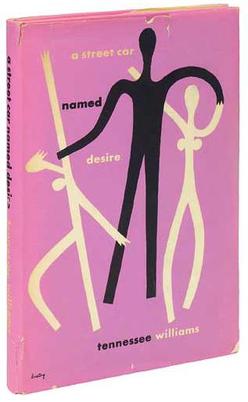
Tennessee Williams
“Kill all my demons, and my angels might die too.” 
― Tennessee Williams author of 
A Streetcar Named Desire


What do you think of this quote from Tennessee Williams, an author of banned works?  Let us know your thoughts by sharing a comment!


Take a look at what Bill Moyer said about Banned Book Week:

Just in case you are unfamiliar with Banned Book Week here is some information from their site:


Banned Books Week is the national book community's annual celebration of the freedom to read. Hundreds of libraries and bookstores around the country draw attention to the problem of censorship by mounting displays of challenged books and hosting a variety of events. The 2012 celebration of Banned Books Week will be held from September 30 through October 6. Banned Books Week was launched in 1982 in response to a sudden surge in the number of challenges to books in schools, bookstores and libraries. More than 11,300 books have been challenged since 1982. For more information on Banned Books Week, click here.

We shared how we plan to celebrate Banned Book Week, are you celebrating Banned Book Week?  If you are, let us know how by posting a comment!

Happy Banned Books Week Reading!
Things You Can Read
Believe In Truth, Beauty, Freedom, Love, and the Power of Books!


Saturday, September 29, 2012

Discovered: Lord Byron’s Copy of Frankenstein Signed by Mary Shelley

Image Credit: Frankenstein
Mary Shelley's Frankenstein
Image Credit: Georgia Institute of Technology
As September closes her doors, and the fall season truly gets underway we, here at The Things You Can Read, thought we'd get into the spirit of the upcoming spooky, creepy, eerie month of October  with a post to welcome this month of Tricks or Treats or both.  And, what better book to post about then the quintessential scary classic, Frankenstein by Mary Shelley. 
Mary Shelley
Image Credit: University of Oxford
What made us think of Frankenstein over all the other scary classics out there?  As luck would have it, it just so happens that Mary Shelley's super scary classic is in the news.  What has brought Frankenstein into the spotlight?  All the attention has to do with the recent discovery of Lord Byron's presentation copy of Frankenstein by Mary Shelley.  In a recent post Open Culture reminded its readers of the genesis of Frankenstein:

"The story behind the writing of Frankenstein is famous. In 1816, Mary Shelley and Percy Bysshe Shelley, summering near Lake Geneva in Switzerland, were challenged by Lord Byron to take part in a competition to write a frightening tale. Mary, only 18 years old, later had a waking dream of sorts where she imagined the premise of her book"

To learn more about this remarkable discovery view the video below:


If you are looking for a copy of Frankenstein, checkout Open Culture's Free ebooks and Free Audio Books.  If you are an old movie buff, like we are, Open Culture has links to the first film adaptation of Shelley's famous novel from 1910, or try the 1931 version.
The Frankenstein Movie Dynasty
Image Credit: 
Georgia Institute of Technology

What do you think is the scariest tale for the Halloween season?  Leave us a comment with your choice.

Additional links of Interest:
Frankenstein at the Bodleian

Happy Halloween Reading!
Things You Can Read
Believe In Truth, Beauty, Freedom, Love, and the Power of Books!


Sunday, September 23, 2012

Annotated Edition Classics-Emma: An Annotated Edition by Jane Austen; Bharat Tandon, editor

Jane Austen
Image Credit: Goodreads
We, here at The Things You Can Read, have made a serious commitment to read the Classics (Book Blogger Appreciation Week post), and with this in mind, we noted that on September 17, 2012 a new annotated edition of Emma by Jane Austen has been released.  We love Jane Austen and we encourage anyone out there who is a Jane Austen fan or a Jane Austen Wanna-be fan to check this one out.

Don't forget to check out our Classics Challenge Page, which lists all the classics we plan to read between September 14, 2012 and September 14, 2017.

Summary from Goodreads:

Emma: An Annotated Edition by Jane Austen; Bharat Tandon, editor


Emma: An Annotated Edition

Emma: An Annotated Edition

Emma, perhaps the most technically accomplished of all of Austen’s novels, is also, after Pride and Prejudice, her most popular one. Its numerous film and television adaptations testify to the world’s enduring affection for the headstrong, often misguided Emma Woodhouse and her many romantic schemes. Like the previous volumes in Harvard’s celebrated annotated Austen series, Emma: An Annotated Edition is a beautiful and illuminating gift edition that will be treasured by readers.

Stimulating and helpful annotations appear in the book’s margins, offering information, definitions, and commentary. In his Introduction, Bharat Tandon suggests several ways to approach the novel, enabling a larger appreciation of its central concerns and accomplishments. Appearing throughout the book are many illustrations, often in color, which help the reader to better picture the Regency-era world that serves as the stage for Emma’s matchmaking adventures.

Whether explaining the intricacies of early nineteenth-century dinner etiquette or speculating on Highbury’s deliberately imprecise geographical location, Tandon serves as a delightful and entertaining guide. For those coming to the novel for the first time or those returning to it, Emma: An Annotated Edition offers a valuable portal to Austen’s world.

Published September 17th 2012 by Belknap Press
ISBN 0674048849 (ISBN13: 9780674048843)
edition language English 
Harvard University Press

Harvard University Press: Emma: An Annotated Edition by Jane Austen
Harvard University Press


Happy Reading!
Things You Can Read
Believe In Truth, Beauty, Freedom, Love, and the Power of Books!

Related Posts Plugin for WordPress, Blogger...